You signed in with another tab or window. Reload to refresh your session.You signed out in another tab or window. Reload to refresh your session.You switched accounts on another tab or window. Reload to refresh your session.Dismiss alert
**Co-athored-by: Claude using Planning agent ⭐⭐⭐ **
#future-friday
This PR isn't meant to be merged, it's just a spike to look into how this can be potentially done. It isn't meant to be reviewed in details but as a POC
Description
In this PR I looked into the migration from styled-components towards restyled and what it could mean for us in performance + effort.
Motivation
With styled-components getting into maintenance mode and achieving on the promise it came with (CSS in JS). We risk on staying behind on using the newest features of React to render our styles along with performance issues.
Forks like this started already appearing and they promise significany performance wins thanks to using new React APIs like useInsertionEffect
That's why I think it's wise to look deeper into this and what it means for us and palette-mobile. Do we want to remain on the css-in-js land or is this an opportunity to look into catching up with the rest of the industry and the way styling is thought in the first drafts in React-native (to be compiled instead of generated in runtime).
Strategy used
Gradual adoption: Use styled-components + restyle at the same time.
The most used components are definitely Flex (using Box) and Text. That's what I focused on migrating. The results were promising.
The video below is on the emulator but the resutls are from a running device and it's the mean of 3 runs
500 components: 5% faster ⚡ Verdict: Fine improvement
Recommendation moving forward
I strongly think this is worth looking further into. I tried connecting Eigen to my local palette, but it didn't work because we inject many value out of our design system. Other devs also reported similar gains from cutting runtime style generation.
What does this mean for product engineers develeopment process?
Ideally? no major changes and no new learning curve outside of palette-mobile.
The Restyle library provides a type-enforced system for building UI components in React Native with TypeScript. It's a library for building UI libraries, with themability as the core focus.
This library assumes that the UI is built upon a design system that (at the very least) defines a set of colors and spacing constants that lays as a foundation. While the library acknowledges that there can be exceptions to the system by allowing any style to be overridden, it keeps the developer most productive when one-off values are kept to a minimum.
Installation
Add the package to your project using one of the following:
yarn add @shopify/restyle
npm install @shopify/restyle
npx expo install @shopify/restyle
Usage
See Usage in the documentation, or see below for the fixture app.
App / Playground
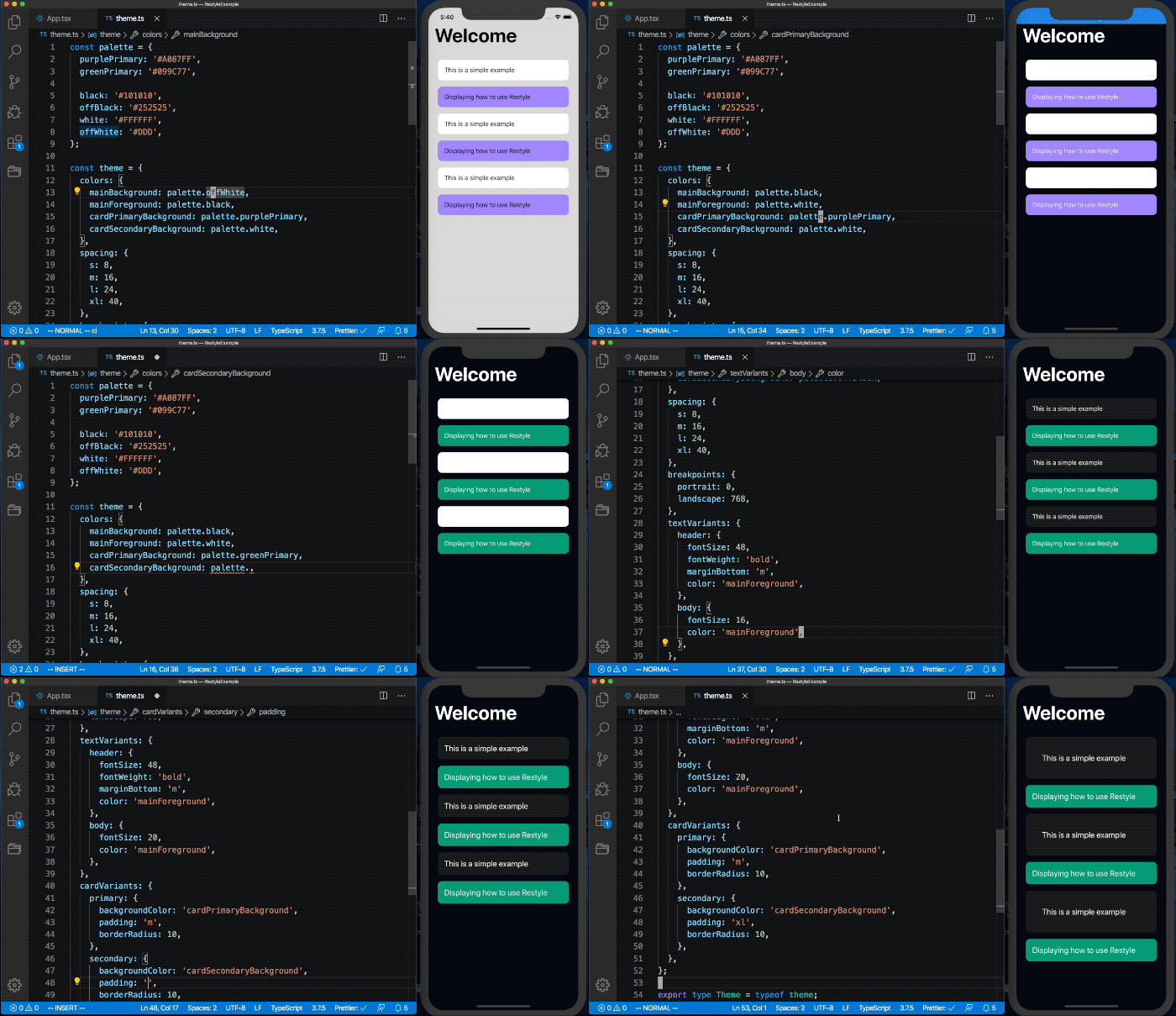
The fixture is an example app to showcase the library's usage.
Running the Documentation site locally
To run the Documentation site locally, please follow the steps below:
This file contains hidden or bidirectional Unicode text that may be interpreted or compiled differently than what appears below. To review, open the file in an editor that reveals hidden Unicode characters.
Learn more about bidirectional Unicode characters
Add this suggestion to a batch that can be applied as a single commit.This suggestion is invalid because no changes were made to the code.Suggestions cannot be applied while the pull request is closed.Suggestions cannot be applied while viewing a subset of changes.Only one suggestion per line can be applied in a batch.Add this suggestion to a batch that can be applied as a single commit.Applying suggestions on deleted lines is not supported.You must change the existing code in this line in order to create a valid suggestion.Outdated suggestions cannot be applied.This suggestion has been applied or marked resolved.Suggestions cannot be applied from pending reviews.Suggestions cannot be applied on multi-line comments.Suggestions cannot be applied while the pull request is queued to merge.Suggestion cannot be applied right now. Please check back later.




**Co-athored-by: Claude using Planning agent ⭐⭐⭐ **
#future-friday
Description
In this PR I looked into the migration from
styled-componentstowardsrestyledand what it could mean for us in performance + effort.Motivation
With styled-components getting into maintenance mode and achieving on the promise it came with (CSS in JS). We risk on staying behind on using the newest features of React to render our styles along with performance issues.
Forks like this started already appearing and they promise significany performance wins thanks to using new React APIs like
useInsertionEffectThat's why I think it's wise to look deeper into this and what it means for us and
palette-mobile. Do we want to remain on the css-in-js land or is this an opportunity to look into catching up with the rest of the industry and the way styling is thought in the first drafts in React-native (to be compiled instead of generated in runtime).Strategy used
Gradual adoption: Use
styled-components+restyleat the same time.The most used components are definitely
Flex(usingBox) andText. That's what I focused on migrating. The results were promising.Screen.Recording.2025-10-17.at.11.08.41.mov
Screen.Recording.2025-10-17.at.11.08.54.mov
Performance Results
Environment: Android emulator
Box Component ✅
Verdict: Excellent improvement
Text Component ✅
Verdict: Fine improvement
Recommendation moving forward
I strongly think this is worth looking further into. I tried connecting Eigen to my local palette, but it didn't work because we inject many value out of our design system. Other devs also reported similar gains from cutting runtime style generation.
What does this mean for product engineers develeopment process?
Ideally? no major changes and no new learning curve outside of palette-mobile.